
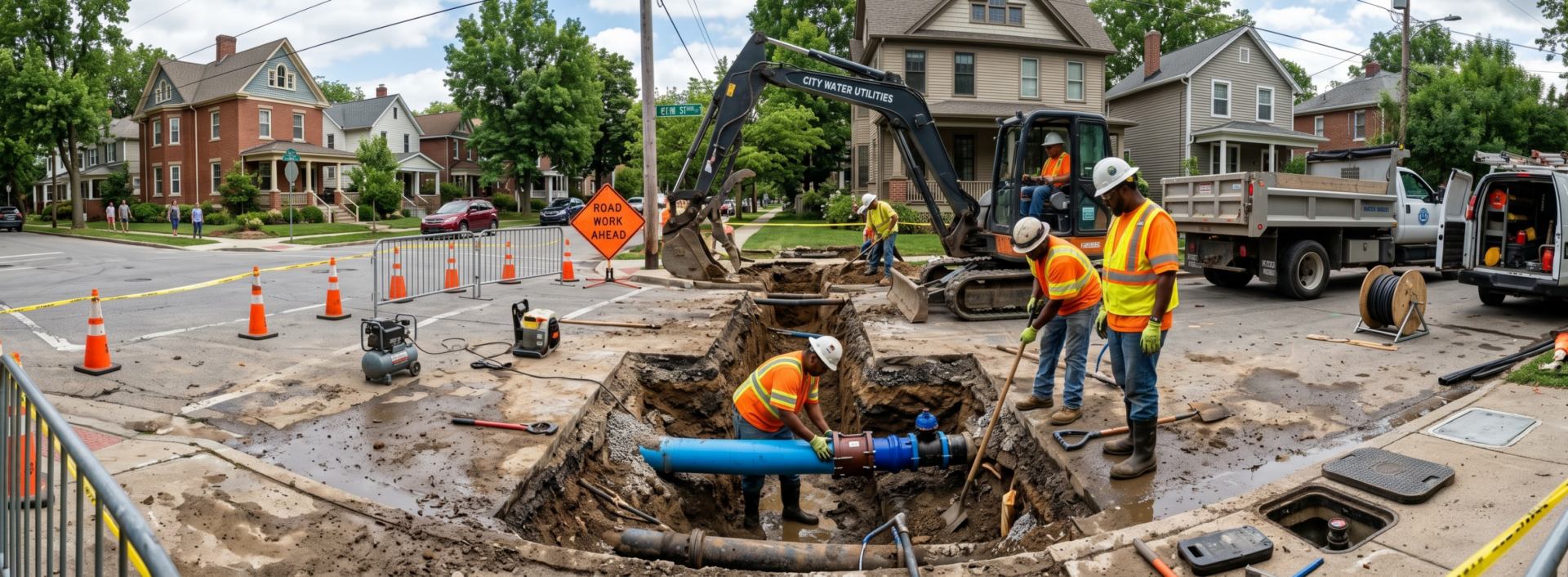
The Right Access Solutions for Lead Service Line Replacement Project
From evaluating existing systems to selecting replacement products and addressing installation challenges, find practical solutions to support your LSLR projects.
BEYOND THE SERVICE LINE
Curb boxes, valve boxes, and related access components are essential to water service infrastructure. The right products simplify installation, accommodate field conditions, and deliver dependable access and long-term performance.
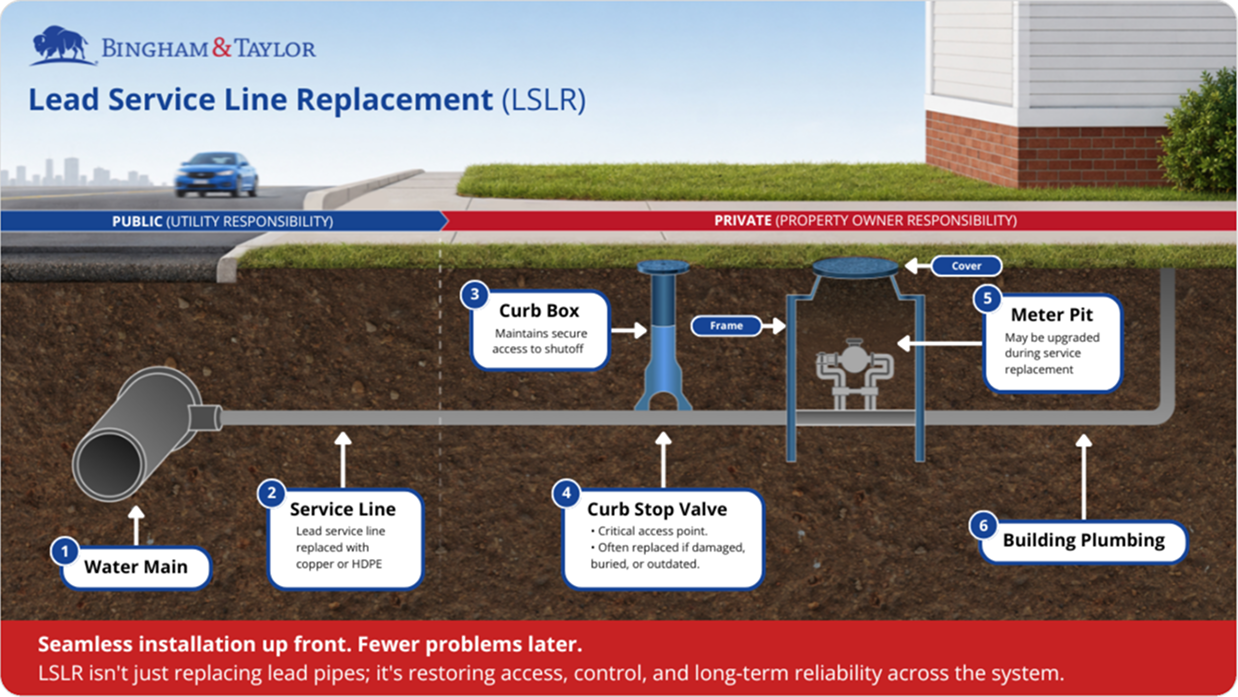
Supporting Infrastructure Beyond the Service Line
Lead service line replacement is an opportunity to evaluate the underground access infrastructure supporting water distribution and service connections. Bingham & Taylor provides American-made solutions that help utilities, engineers, and contractors meet installation requirements while maintaining reliable access for long-term operation and maintenance.

Curb & Valve Boxes
Secure, Reliable Access at Critical Shutoff Points
Curb boxes provide access to service line shutoff valves, while valve boxes provide access to underground water distribution valves. Both play an important role in lead service line replacement projects, supporting installation, operation, and future maintenance.
Bingham & Taylor offers cast iron, plastic, and hybrid configurations to accommodate varying installation conditions, depth requirements, and utility specifications.

Meter Access Solutions
Protection and Easy Access for Meter Systems
Meter pits, frames, lids, and boxes protect water meters while providing access for reading, inspection, and maintenance. During lead service line replacement projects, these solutions help utilities address meter access needs alongside service line improvements.
Bingham & Taylor offers a range of meter access products, from meter pits and frames to heavy-duty MBX meter boxes, to accommodate different installation conditions and utility requirements.

Essential Components
Installation, Adjustment & Repair Solutions
Successful lead service line replacement projects require more than the primary curb box, valve box, or meter pit. Supporting components help crews achieve proper installation, maintain access, and address existing infrastructure conditions.
Stabilizers, paving risers, extensions, lid lifter tools, valve sentinels, repair lids, and locking lids provide options for installation, adjustment, and repair—helping utilities maintain reliable access while reducing the need for unnecessary replacement.

Proudly 100% Made in the USA
Bingham & Taylor underground utility access solutions are built for demanding conditions and long-term performance. Our products meet Build America, Buy America (BABA) and American Iron and Steel (AIS) requirements for federally funded infrastructure projects.
FAQ
The best service box for lead service line replacement (LSLR) depends on the existing infrastructure, utility specifications, installation depth, and site conditions. Adjustable access boxes provide flexibility for different installation depths and finished grades, while material and configuration options help address specific project requirements.
When selecting a curb box or valve box, consider compatibility with existing curb stops, the required adjustment range, and whether the installation calls for replacing or retaining existing components.
Bingham & Taylor has been supplying underground utility access solutions for more than 175 years. Our extensive product lines include traditional cast iron, innovative Bison™ plastic, and hybrid solutions in a wide range of sizes and configurations to meet diverse utility requirements.
Beyond curb boxes and valve boxes, Bingham & Taylor offers complementary underground access products, including paving risers, adapters, stabilizers, repair lids, and access tools, helping utilities and contractors source the solutions they need from one trusted supplier.
To find the right products for your LSLR projects explore Bingham & Taylor’s Curb Box and Valve Box solutions
While replacement of every curb box or valve box may not be required during a lead service line replacement, the work presents an excellent opportunity to evaluate and upgrade existing access infrastructure. When excavation exposes existing curb stops and associated components, replacing aging, damaged or deteriorated materials at the same time may be more practical and cost-effective.
LSLR projects also provide an opportunity to consider the materials and configurations used for underground access and protection. Depending on utility specifications and site conditions, cast iron, plastic, or hybrid solutions may offer advantages.
When existing boxes can remain in service but components are damaged, Bingham & Taylor offers replacement products including repair lids, which are designed to restore access without needing to replace the whole top section. A variety of configurations are available to accommodate a wide range of scenarios and conditions.
Each material has its own advantages and considerations when selecting underground utility access boxes.
Cast iron has a long history of proven performance in waterworks applications. Its strength, durability, and ability to withstand demanding service conditions make it a dependable choice. However, not all cast iron products are manufactured to the same standards. Wall thickness, casting quality, and manufacturing consistency can affect durability and resistance to breakage. While lower-cost options may offer an attractive initial price, utilities and contractors should consider product quality, reliability, and long-term performance when evaluating their options.
Plastic offers advantages including reduced weight, corrosion resistance, and ease of handling. However, not all plastic access boxes are created equal. Wall thickness, material composition, and product design can significantly affect performance. Bingham & Taylor’s Bison™ thick-walled plastic products are engineered to provide a robust alternative, offering strength and durability without the weight of cast iron.
Hybrid solutions combine the advantages of both materials. Typically featuring a cast iron rim and lid of top section with a plastic bottom section, these designs provide strength and durability where it’s needed at the surface while reducing overall weight and potentially lowering material costs.
Bingham & Taylor offers high-quality American-made cast iron, Bison, and hybrid underground access products. Learn more about choosing the right material for your application or explore our curb box and valve box product lines.
Not necessarily. Whether a meter box or meter pit needs to be replaced during lead service line replacement depends on the location of the water meter, the condition of the existing systems, and utility requirements.
LSLR projects can present municipalities and utilities with an opportunity to upgrade metering systems and access. Where outdoor meters are involved, improvements may include accessibility and location or adding automated meter reading and advanced metering infrastructure systems. This may require upgrading to modern products that better support AMI/AMR transmission, such as Bingham & Taylor’s Maverick® composite meter lids.
Bingham & Taylor offers a range of meter access solutions, including light-weight but durable meter pits and heavy-duty MBX meter boxes. Explore our meter access products to learn more.
Many federally funded lead service line replacement (LSLR) projects are subject to domestic sourcing requirements, including the Build America, Buy America Act (BABA) and American Iron and Steel (AIS) provisions.
Requirements vary by funding program, so utilities and contractors should verify applicable regulations and product documentation before purchasing.
Beyond regulatory compliance, choosing American-made products supports domestic manufacturing, American jobs, and the skilled workforce that produces the infrastructure our communities depend on. Domestic manufacturing also provides greater visibility into production processes, quality standards, and material sourcing while reducing reliance on overseas supply chains.
Bingham & Taylor and our parent company, Charlotte Pipe and Foundry, have a longstanding commitment to American manufacturing. We believe the products used to build and maintain America’s water infrastructure should be manufactured here whenever possible. That commitment is reflected in our continued investment in domestic manufacturing and our dedication to producing quality products for the waterworks industry.
Learn more about our commitment to American manufacturing and domestic sourcing compliance.
Lead Service Line Replacement: Underground Access Checklist
Lead service line replacement is tied to more than construction. A few key factors shape project planning:
-
01/
Evaluate existing curb boxes and shutoff access
Determine whether existing boxes are properly aligned, accessible, and suitable for continued service or should be replaced.
-
02/
Confirm curb box size and configuration
Select the appropriate box style, material, and depth adjustment range for the service connection and installation conditions.
-
03/
Assess valve box access where applicable
Identify distribution valves affected by the project and determine whether existing valve boxes require adjustment, repair, or replacement.
-
04/
Review meter access requirements
Evaluate meter pits, frames, lids, and boxes for compatibility with the installation and future maintenance needs.
-
05/
Identify installation and repair components
Consider stabilizers, extensions, paving risers, repair lids, and other accessories needed to maintain proper alignment and access.
-
06/
Verify project specifications and domestic sourcing requirements
Confirm applicable utility standards and American Iron and Steel (AIS) or Build America, Buy America (BABA) requirements for federally funded projects.
-
07/
Plan for long-term access and maintenance
Ensure that selected components will allow crews to locate, operate, inspect, and service underground infrastructure after the replacement work is complete.
Bingham & Taylor offers American-made underground access solutions to support lead service line replacement projects, from initial installation through long-term maintenance.